

What Pop Filters Do Studios Use
(Alisa Apps Featured in Photo)
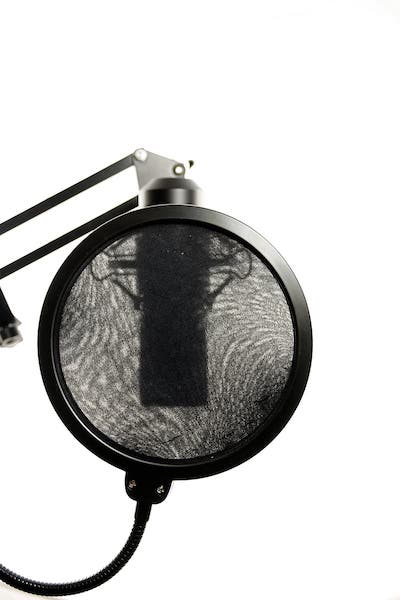
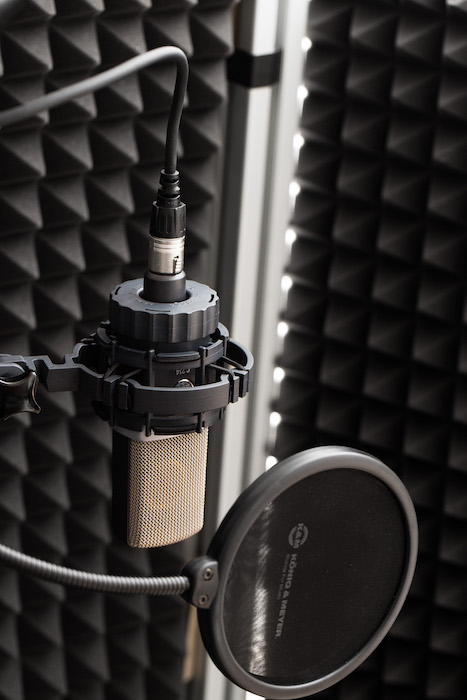
A pop filter is a unproblematic mesh shield we place in front of a microphone. Typically made of nylon or metal, they clamp to a mic stand with an adjustable gooseneck.
For about shut-miked song recording applications, they are a must. So why are pop filters then important?
What does a pop filter practise?
A popular filter's main purpose is to reduce the acoustic free energy of plosive sounds in the human vox; these are primarily words that start with the messages 'b' or 'p.'
We've all heard circulate announcements that have a ton of loud clicking and banging noises in them. Nosotros don't hear these things when speaking to each other, but a microphone greatly amplifies the noise.
The problem gets much more noticeable when the vocalist or speaker is close to the microphone. This is because the actual blast of plosive air is concentrated closest to the oral fissure itself. The air tin can hitting a mic capsule and then hard that information technology saturates information technology, or information technology can fifty-fifty clip the preamp. Obviously we desire to avoid this in the studio, lest we ruin our song accept.
Some microphones have a loftier-pass filter y'all can switch on or off. Since plosives are depression-end material, this tin can be helpful. Still, though, we have the trouble of actual physical air hitting the capsule.
To make matters worse, all directional microphones are susceptible to proximity issue.This is a bass build-up that occurs when the mic is very close to a sound source. Y'all can see how this would farther amplify plosives in the homo vocalization.
Condenser microphones are specially prone to popping because of their light, sensitive diaphragms. Dynamic mics have a footling more resistance because they tolerate high SPLs so well, simply they definitely aren't unaffected by plosives.
To help solve all these problems, engineers place a pop filter a few inches in front of their microphone sheathing!
- Related:Recording Vocals in Your Domicile Studio
How does a pop filter piece of work?
Honestly, there's null fancy most a screen in front of a microphone! What does a popular filter practise, then?
The manner information technology works is very unproblematic: the bulk of the sound travels through the mesh with no resistance. At that place can be some high-finish loss, but it's fairly inconsequential. Plosives, though, hit the screen and break upwards. The concentrated blast of air gets dispersed by the filter, reducing its bear on on the microphone.
Lots of pop filter designs actually have ii layers of mesh spaced an inch or and so autonomously. Whatever passes through the offset layer gets caught by the second, making them very effective for even the worst plosives.
Merely don't forget to place the filter at least a couple inches away from the microphone capsule itself. This ensures layers of protection — vocalizer > pop filter > ii-3″ air gap > microphone.
Finally, popular filters tin cake saliva from ending up all over your microphone. Gross! Really, though, over years and years of use, saliva can actually corrode the internals of your mic. We definitely don't want that!
Is loftier-frequency loss a concern?
Yes and no. Most engineers will probably tell you the highs captivated by nylon pop filters hardly brand a divergence on the sound. If you are noticing problems with loftier-end attenuation using nylon filters, endeavour using a metal one!
A metal pop filter has more than widely spaced mesh. This lets the higher frequencies pass right through, but the holes are withal small plenty to break up plosives on touch on.
Are pop filters necessary for good recordings?
You might think after all we've discussed the reply would be a resounding 'yes.' Realistically, though, it's a 'no.' Though they're helpful — and require basically zero endeavor autonomously from purchasing ane — a pop filter isn't 100% necessary for a quality recording, or fifty-fifty to reduce plosives.
- Related:Recording Vocals [Tips from the Pros]
You can minimize plosives through microphone technique, i.eastward., positioning the capsule slightly off-axis to the vocalist so he/she isn't singing directly into it. (This helps reduce some sibilance as well!) Experienced vocalists sometimes manage their own plosives by turning slightly away from the mic or backing off a few inches when singing loudly.
Lots of absurd toys accept made our lives much easier in the studio, but there'southward still no replacement for noesis, experience, and peachy mic technique!
Removing plosives while mixing (filter fails)
Popular filters aren't perfect. If yous're editing and getting ready to mix your vocals, merely the pop filter didn't do its job on the style in, y'all aren't out of luck.
Zoom in closely on the give-and-take where yous hear the plosive. It should exist right at the beginning — the very commencement letter of a 'b,' 'p,' or even 't' word. Select the transient where the sound is most offensive. Now we want to print a loftier-pass filter right onto the plosive.
Some DAWs call this "choice-based processing" or something similar — Pro Tools calls it AudioSuite. With the plosive selected, pull upwards an EQ and set up a loftier-pass to somewhere around 200 Hz for the nearly offensive plosives. Print it and listen back. Did that exercise the trick? If not, attempt setting the EQ to a college frequency to minimize that low-end free energy.
If you made the right clip selection, you should accept transparently reduced the low-stop on the plosive without hurting the rest of the word or phrase!

What Pop Filters Do Studios Use,
Source: https://producelikeapro.com/blog/what-does-a-pop-filter-do/
Posted by: byrdheizieray.blogspot.com
0 Response to "What Pop Filters Do Studios Use"
Post a Comment